


A continent cannot market integration to the world while fracturing from within.
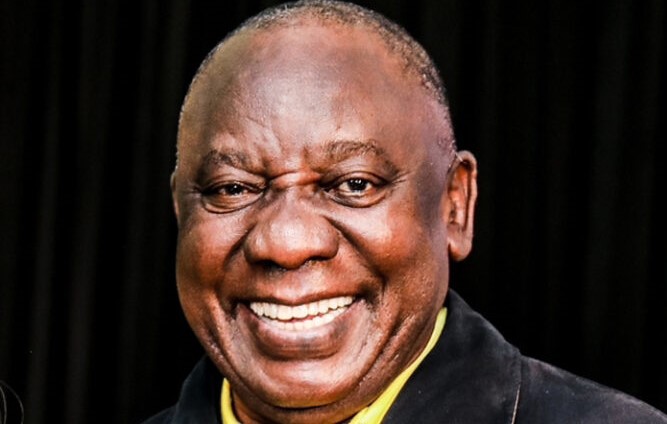
There are moments that test whether Africa’s grand vision of unity is a lived commitment or simply an aspirational headline. The recent statement by South African President, Cyril Ramaphosa, to the National Council of Provinces, delivered against a backdrop of rising anti-foreigner sentiment and Operation Dudula-style demonstrations, is one such moment.
Speaking with notable directness, the President Ramaphosa declared: “There is no place for racism, sexism, xenophobia, Afrophobia or any other form of intolerance in South Africa.”
The statement was necessary and welcome. But it also raises a broader question that extends well beyond South Africa’s borders: when does a persistent pattern of intra-continental hostility become a continental responsibility?
Understanding the Terms
It is worth pausing on the distinction between the two terms at the heart of this discussion.
Xenophobia, the hostility directed at foreigners, is a global phenomenon. It tends to intensify during periods of economic pressure, when competition for jobs, housing and resources creates social tension, and when political narratives assign blame to visible outsiders rather than to structural causes.
Afrophobia is a more specific expression of the same impulse of hostility directed by Africans toward fellow Africans. What makes it particularly significant is its location. On a continent that has formally committed to integration, free movement and shared prosperity, the violent rejection of African migrants by South African communities represents not merely a social problem, but a direct contradiction of the policy frameworks the continent has spent decades building.
Both phenomena follow similar patterns. Economic hardship generates anxiety. Anxiety seeks an outlet. And those who appear most different, in language, dress, culture or origin, become the focus of that frustration. The consequences, however, are not merely personal. They ripple outward, shaping perceptions, disrupting trade and undermining the carefully constructed narrative of an Africa on the rise.
The Scale of What Is at Stake
To understand why this matters economically, it is important to appreciate the scale of intra-African movement and commerce.
Intra-African trade surged to an estimated $220 billion in 2024, a 12.4% year-on-year increase, driven in significant part by the ongoing implementation of the African Continental Free Trade Area. The UN Economic Commission for Africa projects a further 35% increase in intra-African trade by 2045, following full African Continental Free Trade Area [AfCFTA] implementation.
The movement of people tells an equally compelling story. Intra‑African migration is predominantly internal.51% of African emigrants stay within Africa with notable increase since 2010. They are Africans moving within Africa, seeking opportunity, pursuing education, building businesses, and contributing to the economies of their host nations.
South Africa sits at the centre of this picture. It is Africa’s top intra-African trader, with trade flows reaching $42.1 billion in 2024. It is also, historically, one of the most sought-after destinations for African migrants. The tension between those two realities of economic openness and social hostility, is the central contradiction that this conversation must confront.
A Brand Crisis With Measurable Consequences
The data points to a clear conclusion: episodes of xenophobic and Afrophobic violence inflict measurable damage on Africa’s collective brand.
The mechanism is straightforward. Images and narratives of Africans being driven from their businesses or homes in another African country do not remain local stories. They circulate globally. They reach the diaspora communities that direct significant remittance flows and investment decisions toward the continent. They land on the desks of foreign investors assessing political and social risk. They arrive in the inboxes of tourism boards and authorities trying to position Africa as a welcoming, unified destination.
The message they carry undermines years of careful positioning. It raises a simple but devastating question in the minds of potential partners and visitors: if Africa cannot welcome its own, can it welcome the world? This is not a peripheral concern. It is a core brand risk.
The African Union’s Moment
The African Union’s founding instruments are explicit. The Constitutive Act, the Agenda 2063 framework, and the Protocol on Free Movement of Persons all commit member states to the dignity, rights and mobility of African citizens across the continent. The AU created a single continental passport and in 2018 codified its commitment to borderless movement in the Protocol on Free Movement of Persons. And yet, only four of the 55 AU member states have ratified that protocol, well short of the 15 required for it to enter into force.
This gap between commitment and implementation is where Afrophobia thrives.
I am not suggesting that the AU can legislate social attitudes. But institutional leadership has a demonstrable effect on national policy, on public discourse and on the frameworks within which communities manage difference. The AU’s relative silence on Afrophobia, as a named, specific, recurring phenomenon, has created a vacuum that others have been too willing to fill.
The case for more active AU engagement rests on three clear foundations.
The first is legal coherence. The AU cannot credibly advance its free movement protocol while remaining silent on the environment of hostility that makes that movement dangerous. The two must be addressed together.
The second is economic logic. Studies show AfCFTA has stimulated intra‑African trade and improved market access, though job‑creation estimates vary and are not yet empirically settled. That progress depends on a social environment in which African traders, entrepreneurs and workers can move, operate and thrive without fear. Trade integration and social cohesion are interdependent and not separate workstreams.
The third is reputational stewardship. Africa’s global brand is a collective asset. No single nation owns it, and no single nation’s failures are entirely contained within its borders. When Afrophobia goes unaddressed at the continental level, the reputational cost is distributed across all 55 member states.
What Constructive Engagement Looks Like
Calling for AU intervention is not a call for political grandstanding. It is a call for principled, visible, consistent leadership on an issue that the AU’s own frameworks already demand it address.
In practical terms, this means AU leadership speaking publicly and specifically about Afrophobia, not as a footnote to broader migration discussions, but as a named priority. It means activating bilateral diplomatic channels between affected nations to manage tensions early, before they escalate. It means commissioning rigorous, data-driven assessments of how Afrophobia is affecting intra-African trade, investment and tourism flows. And it means accelerating the ratification of the Free Movement Protocol, while simultaneously investing in the public education and community dialogue that make free movement socially sustainable.
President Ramaphosa’s statement was an important signal. But statements, however firm, are the beginning of a response and not the end of one.
The AfroSphere Perspective
Africa is in the midst of building one of the most compelling brand stories in the world. A story of economic renaissance, cultural confidence and homecoming. It is a story that is attracting genuine global attention and investment.
But that story requires internal consistency. A continent that promotes unity while tolerating the systematic harassment of its own people on the basis of national origin is a continent whose brand message is undermined at its foundation.
The numbers are clear: intra-African trade is growing, intra-African movement is expanding, and the economic case for integration has never been stronger. What is needed now is the social and political leadership to match that economic ambition.
When Afrophobia meets xenophobia on an African street, the cost is not only human. It is strategic. And it belongs to all of us.
AfroSphere is a platform dedicated to African country branding, diaspora engagement and the elevation of Africa’s global narrative. This Article was written by Akwasi Agyeman, Chief Executive Officer, Africa Center for Hospitality, Aviation, and Tourism [AFCHAT] and a former Chief Executive Officer, Ghana Tourism Authority [GTA].

Comments are closed.