


Bravado has no place in broadcast journalism. A guest has the right to be heard and must be treated with respect by the journalist or broadcaster interviewing them.
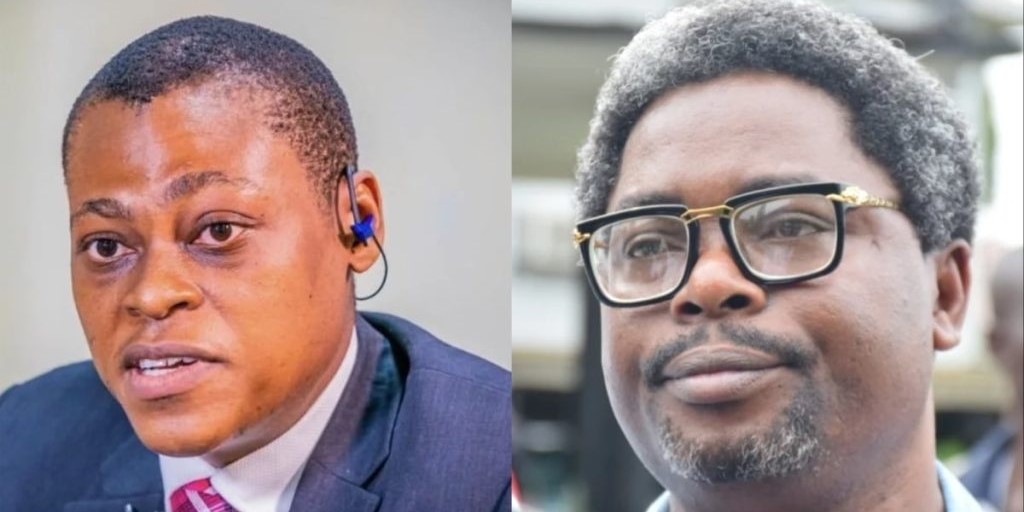
The recent incident on Arise TV’s The Morning Show involving Lere Olayinka, media aide to the Federal Capital Territory [FCT] Minister, Nyesom Wike, raises important questions about the rights and responsibilities of both interviewees and broadcasters.
On 4 September 2026, the programme ended its interview with Olayinka after he refused to answer questions from co-anchor Rufai Oseni. Oseni had asked about the inclusion of former Minister Betta Edu on a presidential campaign council despite corruption allegations.
Olayinka declined to engage, saying he would only respond to “reasonable human beings” and objecting to a term he claimed Oseni had used disrespectfully towards him in a previous interview.
I also understand, as many commentators have pointed out, that the previous altercation between Olayinka and Oseni may have informed Olayinka’s position. If there had been an earlier disagreement between the two, it was foreseeable that their interaction could become tense.
This is where I believe the programme’s production team also deserves scrutiny. The producer and editorial team should ideally have anticipated the possibility of such an outburst and held a clear pre-interview, or “before-air”, discussion with the guest about the format, the participating anchors and the expectations of the interview. That appears to have been a missed opportunity.
Co-anchor Ayo Mairo-Ese reminded Olayinka that he had accepted an invitation to appear before all three anchors and eventually terminated the interview when he maintained his refusal.
There are two distinct issues here, and professional broadcast journalism requires that they are not conflated.
First, an interviewee has the right to decline to answer a question. A journalist may press, challenge or reformulate the question, but no guest can be compelled to provide an answer. The refusal itself can become part of the story, and the audience is perfectly capable of drawing its own conclusions from it.
Second, however, a guest does not ordinarily have the right to dictate which accredited member of an interview panel may question him. Olayinka accepted an invitation to appear on The Morning Show, presumably knowing that Rufai Oseni was one of its anchors. To declare on air that he would answer the other anchors but not Rufai placed the programme in a difficult editorial position.
That said, whether terminating the interview was the best journalistic response is another matter.
In my view, there was greater journalistic value in keeping the interview going, as many have noted. The anchor could simply have placed Olayinka’s refusal on record, allowed Rufai to ask his question, noted that the guest had declined to answer it, and proceeded with the interview.
That would have preserved the broadcaster’s editorial authority without allowing an interpersonal disagreement to become the dominant story.
Indeed, the strongest response to a guest who refuses a legitimate question is often not to throw him off air, but to let the unanswered question remain before the court of public opinion.
Sometimes, silence is more revealing than an answer. There is also a wider issue concerning interviewing styles.
Many viewers clearly like Rufai Oseni and appreciate his energetic and confrontational style. That is perfectly understandable. However, popularity and audience appeal should not be confused with adherence to the professional standards and ethics of journalism.
In my view, some aspects of his interviewing style often appear to go beyond what one would ordinarily expect from the conventions of professional broadcast journalism. Journalism is a profession and, like every profession, it has rules, ethics and standards. Those standards should apply even when the journalist is interviewing someone with whom there is a disagreement.
This is not peculiar to one individual. At times, the style and conduct of interviews on The Morning Show appear to cross the line between robust journalism and confrontation. Even Dr Reuben Abati, in some instances, has been seen moderating the approach of his younger and less experienced colleagues.
The lesson is not that journalists should become timid. Far from it. Good journalism must be courageous, questioning and capable of holding public officials and their representatives to account. But firmness does not require aggression, and tough questioning does not require grandstanding.
Guests appearing on current-affairs programmes must expect difficult, uncomfortable and sometimes politically sensitive questions. They cannot reasonably expect to control the questions they are asked or select which members of an interviewing panel may question them.
Equally, journalists and broadcasters must ensure that vigorous questioning does not descend into language or conduct that allows the interview itself to overshadow the issues being interrogated.
The ultimate responsibility of the journalist is neither to win an argument nor to punish a difficult guest. It is to extract information, interrogate issues and enable the audience to arrive at an informed judgement.
On that score, continuing the interview while firmly recording Olayinka’s refusal to answer Rufai might have served the viewer better than bringing down the curtain.
In broadcast journalism, the microphone is not a weapon, and the interview is not a contest to determine who can outshout whom. The public is the ultimate audience, and it deserves journalism that is firm, fair, professional and focused on the issues.
By Lucky George, Ph.D.
Journalism and Media Studies
2006 Winner, European Commission Lorenzo Natali Prize for Journalists Reporting on Human Rights and Democracy

Comments are closed.